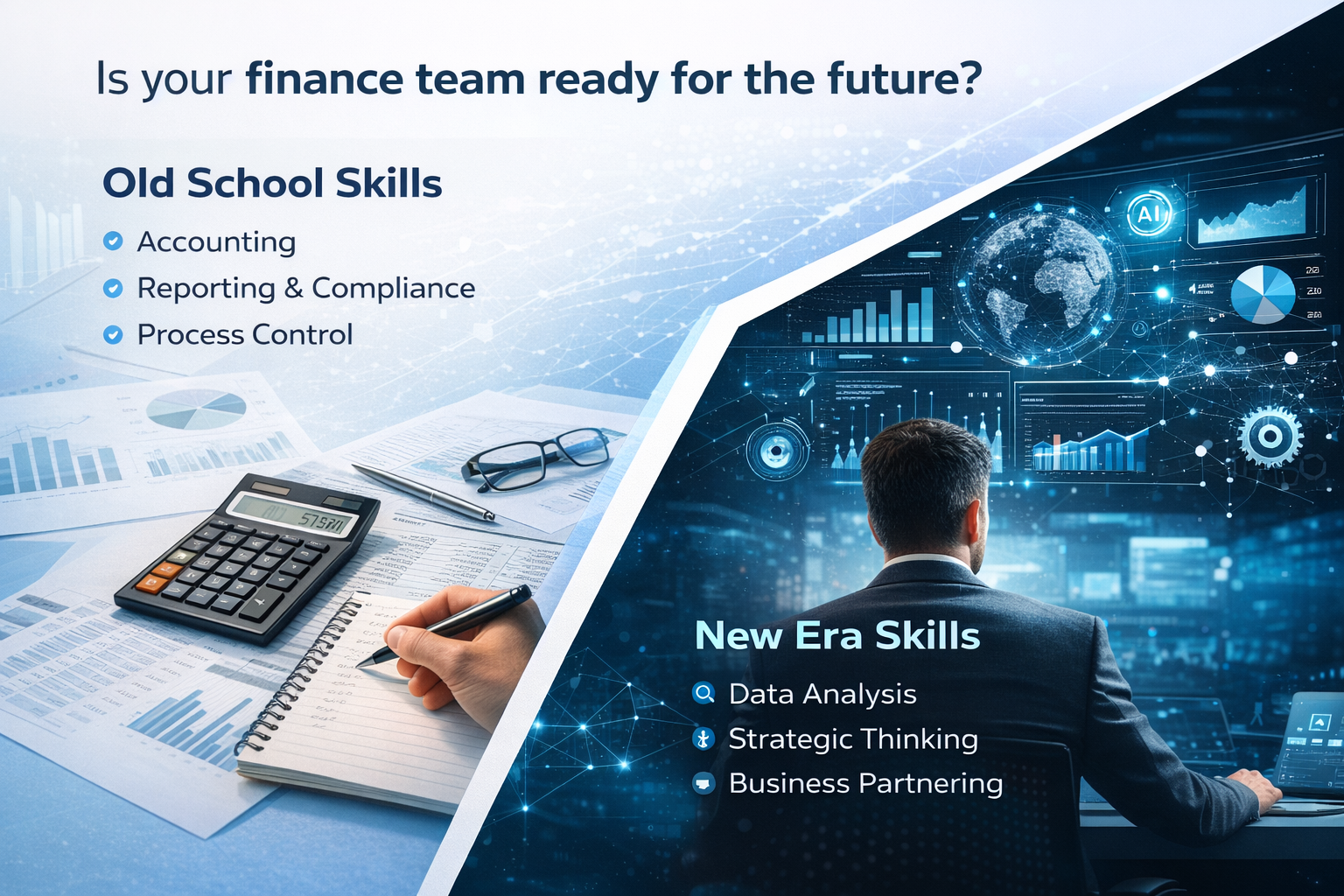
Why most transformations change at the hiring stage

Most finance transformations do not fail because of systems

They fail because of people.


More specifically, they fail because businesses hire the wrong types of people to deliver them.

This is uncomfortable for many organisations to admit, because it is far easier to blame technology, budgets or timelines than recruitment decisions.

But in practice, this is where most finance transformations quietly break down.


The promise of finance transformation


When businesses talk about finance transformation, they usually mean:


  • Better insight
  • Faster decisions
  • More commercial influence
  • Greater automation
  • A more strategic finance function


All sensible aims.

But these ambitions rarely match the profiles being hired to deliver them.


Where it goes wrong


Most transformation programmes still recruit in the same way as business as usual finance roles.


They prioritise:


  • Technical accounting backgrounds
  • System familiarity
  • Process experience
  • Industry match


All of which matter.

But transformation is not built on stability. It is built on change.

And the skills required to run a stable finance function are not the same skills required to redesign one.


Operators versus builders


This is where many organisations get stuck.

They hire operators when what they really need are builders.


Operators thrive when:


  • Processes are defined
  • Rules are clear
  • The system already works
  • Change is incremental


Builders thrive when:


  • Things are unclear
  • Processes need redesigning
  • There is ambiguity
  • Change is constant


Most finance transformations require builders.

Most hiring processes deliver operators.


That mismatch is fatal, even when the people themselves are strong.


Why businesses default to the wrong profiles


This usually happens for very human reasons.


Hiring managers look for what feels safe.
They hire what they know.
They choose familiarity over fit.

There is also a fear factor.


Transformation is already risky. So businesses try to reduce perceived risk by hiring people who look like a “sure thing”.

Ironically, that is exactly what increases the real risk.


The cost of getting this wrong


When the wrong profiles are hired into transformation roles, a few things happen.


Change slows down.
Decisions get deferred.
Processes are improved instead of rethought.
Legacy thinking survives under new systems.


On paper, transformation is happening.


In reality, the function stays largely the same.


What successful finance transformations do differently


The finance transformations that succeed usually start with a different hiring mindset.


They look for people who:


  • Question before they optimise
  • Challenge rather than accept
  • Are comfortable with unfinished thinking
  • Can influence without formal authority
  • Think commercially, not just technically

They hire people who are as comfortable building something new as they are running something existing.


A more useful hiring question


Instead of asking:
Has this person done this role before?

A better question is:
Has this person built something like this before?

That shift alone changes who you attract, who you hire and ultimately whether transformation becomes real or just cosmetic.


The uncomfortable truth


Most finance transformations fail long before the system goes live.

They fail when the wrong people are put in charge of delivering them.

Technology matters. Budget matters. Governance matters.

But none of them compensate for hiring people who are not wired to create change.


By Eliot Acton January 27, 2026
Speed has become a badge of honour in recruitment
By Eliot Acton January 27, 2026
There is a lot of noise right now about talent shortages in finance.
By Eliot Acton August 14, 2025
Will AI Replace Accountants? What Finance Leaders Need to Know in 2025 Artificial intelligence is transforming finance at an unprecedented pace. From automated reporting to predictive analytics, AI tools are changing the way finance teams operate. This has raised a pressing question for finance leaders and professionals alike: will AI replace accountants? The short answer is no. The long answer is that AI will redefine accounting roles, shifting focus from manual processes to strategic decision making and value creation. AI is a Tool, Not a Replacement Many finance teams fear that AI will make human accountants obsolete. The reality is different. AI is designed to enhance human capabilities, not replace them. Tasks that are repetitive time consuming or prone to error are being automated, allowing accountants to focus on higher value work. Some examples include: Automated Reconciliations AI can quickly identify discrepancies and match transactions, reducing errors and freeing up accountants to analyse exceptions. Invoice and Payment Processing AI enabled systems can process large volumes of invoices and payments faster than manual methods. Predictive Financial Analytics Accountants can use AI to forecast cash flow identify trends and provide actionable insights to business leaders. AI does the heavy lifting, but humans remain essential for interpretation, judgement, and strategic insight. New Skills for Accountants in an AI Driven World As AI becomes more embedded in finance, accountants need to evolve. Traditional accounting knowledge remains important, but professionals now also need skills in: Data Analysis The ability to work with complex datasets and extract meaningful insights. AI Tools and Automation Familiarity with AI driven accounting platforms and process automation tools. Strategic Thinking Translating data insights into actionable business decisions. Change Management Supporting the adoption of AI tools and processes within the finance function. Accountants who combine these skills with traditional expertise will be in high demand. The Benefits of AI for Accountants and Finance Teams AI does not replace accountants; it enhances their work and creates new opportunities: Efficiency Tasks that used to take hours can be completed in minutes. Accuracy AI reduces human error in reporting and reconciliations. Insight Accountants can focus on strategic analysis rather than repetitive tasks. Professional Growth Exposure to AI and data analytics prepares finance professionals for senior strategic roles. Finance teams that embrace AI are not only more efficient but also more influential within their organisations. Building an AI Ready Accounting Team For finance leaders, the focus should be on building teams that are AI ready rather than AI dependent. This means: Hiring Accountants with Tech Fluency Look for professionals who understand AI tools and data analytics in addition to accounting principles. Upskilling Existing Staff Provide training in AI platforms and analytics to ensure the current team can work effectively with new technology. Redefining Roles Shift the focus of accounting roles from transaction processing to insight generation, strategy support, and advisory work. At Gravitate, we specialise in sourcing accountants and finance professionals who combine traditional expertise with AI and automation skills. We help businesses build teams that can thrive in a rapidly evolving AI driven finance landscape. AI will not replace accountants. It will change the nature of accounting work and elevate the role of finance professionals from transactional tasks to strategic influence. Finance leaders who embrace this shift and invest in AI ready talent will gain a competitive advantage. The future of accounting is not human versus machine. It is human working with machine to deliver smarter, faster, and more insightful finance.